

Product images are now more than just “nice to have” in the rapidly changing world of digital marketing and e-commerce. Whether you’re selling jewelry, electronics, clothing, or home décor, a customer’s decision to click “Buy Now” or scroll away is frequently influenced by how your product appears online.
AI-generated imagery and traditional product photography are currently the two main ways that brands can create those images.
Each has its own advantages, disadvantages, and best applications. So how do you make a decision? Let’s dissect it.
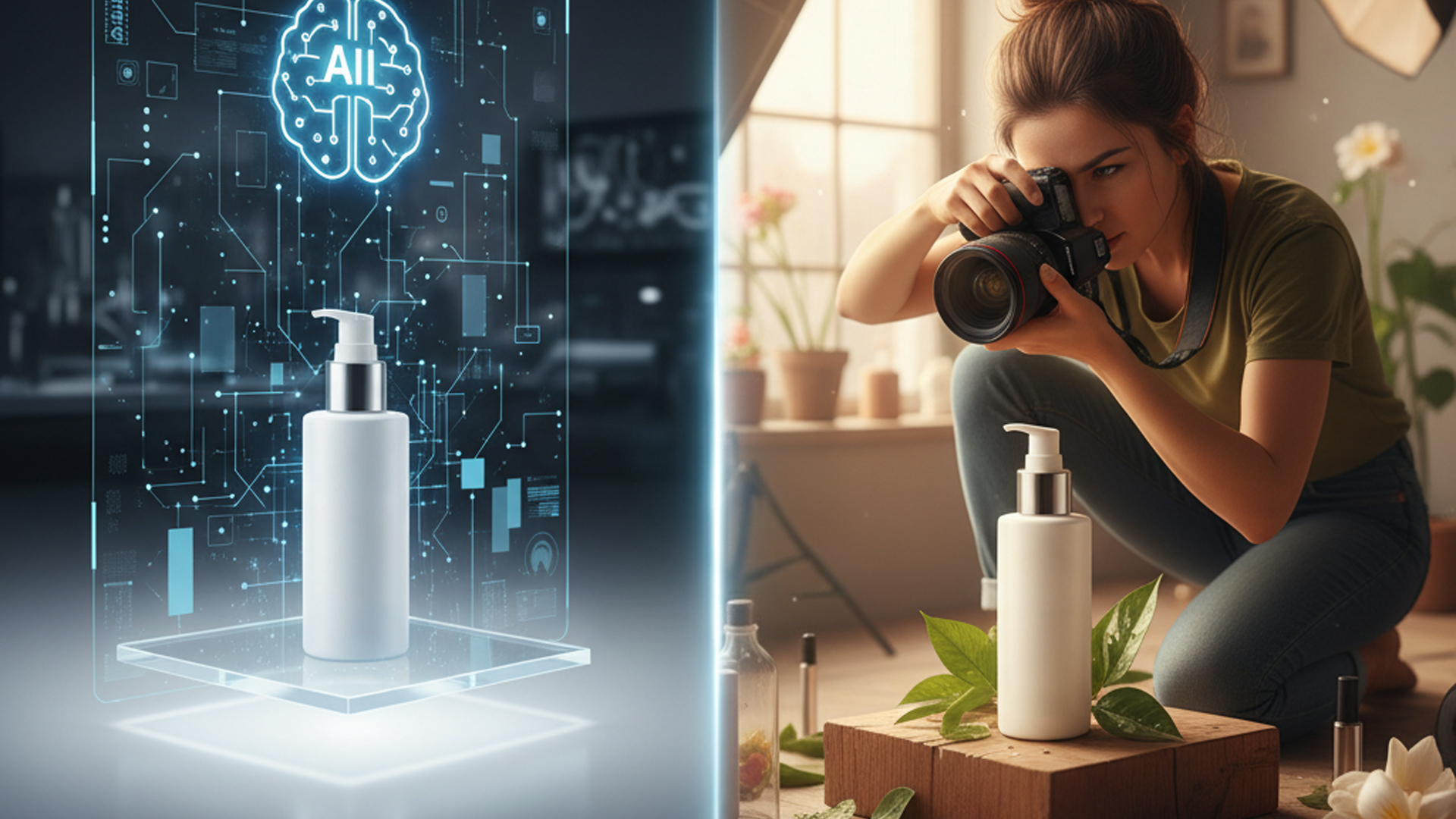
What Is Traditional Product Photography?
Product photography involves capturing real photos of your items using a camera, lighting setup, backdrop, and post-processing.
Benefits
- Accurate representation
You get real textures, colors, and details—especially crucial for items like clothing, cosmetics, or handcrafted pieces. - Authenticity builds trust
Customers often trust real photos more, particularly when buying premium items. - Works perfectly for platforms with strict rules
Some marketplaces (like Amazon) require real product images with no AI alterations.
Limitations
Expensive: studio rental, photographer fees, props, models.
Time-consuming: scheduling, shooting, editing, reshoots.
Inflexible: small changes often require retaking photos.
What Is AI Product Image Generation?
AI tools can create hyper-realistic product images without a studio, props, or even a physical product. You can generate lifestyle shots, white-background images, seasonal themes, and more.
Benefits
- Extremely cost-effective
No equipment, no studio, and often no professional photographer needed. - Unlimited creativity
Place your product on a beach, inside a luxury apartment, or floating in space—without travel or props. - Fast and scalable
Generate dozens of variations in minutes.
Limitations
May not capture tiny product details accurately.
Can produce inconsistencies across images (size, texture, perspective).
Some platforms are still evaluating or restricting AI-only product images.
- Requires careful prompting and editing to ensure realism.
AI vs Product Photography: A Direct Comparison
| Category | Product Photography | AI Product Imagery |
| Cost | High | Low |
| Speed | Slow | Fast |
| Accuracy | Excellent | Good (but varies) |
| Creativity | Moderate (limited by setup) | Unlimited |
| Scalability | Requires time & resources | Extremely scalable |
| E-commerce compliance | Fully compliant | Depends on platform |
| Consistency | Very high | Can vary |
Which Should You Choose for Your Brand?
Choose Product Photography if:
You’re selling high-value items like jewelry or electronics.
Color accuracy and tiny details are critical.
You sell on strict marketplaces (Amazon, Walmart, Etsy).
You want maximum customer trust.
Choose AI Images if:
You need lifestyle shots for social media or ads.
You want creative backgrounds without hiring props or models.
You need fast output for large catalogs.
You work with products that exist in concept/prototype form.
Use Both for the Best Results
Many modern brands use a hybrid strategy:
Real photos for their e-commerce listings.
AI-generated lifestyle images for Instagram, ads, banners, and seasonal campaigns.
This gives you authenticity and creative freedom.
The Future: AI + Photography Working Together
AI isn’t replacing product photographers—it’s transforming the workflow. Photographers now use AI to:
Generate background concepts before shooting
Enhance or clean images
Create variations from main photos
Visualize props or lighting setups
AI expands the creative toolkit, while photography ensures accuracy and trust.
Final Thoughts
AI product imagery is an exciting, budget-friendly way to create stunning visuals at scale, but traditional photography still leads in realism and reliability. The ideal choice depends on your brand’s needs, audience, and budget.
For most, the winning strategy is a blend of both—real photos for accuracy and AI images for creativity.